Overview of the global sweet potato market
The sweet potato market is growing. In Europe alone, demand has increased by 12% in recent years. In 2017, total consumption exceeded 300,000 tonnes. And growth had not yet peaked, as European consumption remained well below that of the United States. Good news for the European sector.
Traders are following this trend: demand is strong, and producers in Northern Europe are testing sweet potato cultivation in their fields, albeit with mixed results. In the US, the sector is preparing for the traditional Easter-related peak in demand, but is also looking for ways to increase consumption throughout the year. In Israel, producers face a “luxury” problem: high domestic market prices have significantly reduced exports in recent years, although new opportunities are also emerging.
Israel: high domestic prices curb exports
In recent years, Israel’s sweet potato sector has shifted from a predominantly export-oriented approach to a greater focus on the domestic market.
In the past, Israel was among the main suppliers of sweet potatoes to Europe. In 2012, it was the second most important supplier, after the US. During the peak period, the country exported 20,000 tonnes per year, but that figure fell to an average of 6,500 tonnes over the following two years.
The main reason for this reduction is the high prices achieved on the domestic market, resulting from increased demand and reduced supply. Consumption in Israel has risen in recent years, causing a growing share of national production to be directed to the domestic market.
In the previous two years, drought and exceptionally high temperatures also affected production areas, leading to disappointing volumes. As a result, prices rose even further and a large share of production was channelled to the domestic market.
Currently, the price fluctuates between €2.50 and €3.50 per kilo, a level considered normal for this time of year, when supply reaches its peak. Historically, however, prices remain high.
The volume that remains available for export is shipped exclusively to Europe. France, the Netherlands and the United Kingdom are the main buyers.
Exports to the US have declined sharply due to quality issues associated with the long transport distance. For other products, Russia is an attractive market, but the high prices of Israeli sweet potatoes mean there is no significant Russian demand.
The main obstacle to export growth is the relatively low quality and limited capacity of the storage facilities for Israeli sweet potatoes.
The varieties used were mainly selected with local climate conditions and soil types in mind. However, as the market has grown, demand for higher-quality products has also increased. The government and research institutes are working together to develop new varieties capable of delivering higher yields and better quality.
US prepares for Easter demand peak
The US sector is preparing for the increase in demand typically seen around Easter. Supply remains stable.
“We are approaching the third peak period, which occurs around Easter,” says a trader. After the Christmas holidays, demand stabilised again.
One trader says they have sufficient volume for the coming months, at least until the start of the new season in autumn. Although a slightly higher volume is available, demand has also increased.
Sweet potato producers are in an expansion phase. New growers are emerging, while existing growers are increasing planted areas.
Even so, one trader believes the market needs to do more to promote sweet potato consumption outside the holiday periods and to position it as a regular staple. Demand continues to reach its main peaks at Thanksgiving, Christmas and Easter.
“Prices are extremely low, almost 10% below last year’s,” says a trader. Even so, they expect prices to recover.
“At present, the situation is not sustainable; if growers cannot make money, they will stop growing sweet potatoes and demand will increase.”
Nigeria is the largest producer in Sub-Saharan Africa
With a total production of 3.92 million tonnes, Nigeria is the largest sweet potato producer in Sub-Saharan Africa and is among the world’s largest producers.
The crop is produced mainly in the north of the country. Despite the high volume available, there is little export potential.
Due to the increase in the excise duty scheduled for June, the price is expected to rise by an average of 6%.
Cultivated area in China increases by 40%
Guangxi is one of China’s main sweet potato producing regions. The market performed exceptionally well in the previous year, encouraging growers to significantly increase the cultivated area.
According to estimates, the cultivated area that year increased by 40% compared to the previous year.
In northern China, cultivation is largely mechanised, while in the south there is greater use of labour. This difference is reflected in prices: sweet potatoes produced in the north are cheaper than those produced in the south.
The season in the north, however, is short and runs between October and November. In Guangdong and Guangxi, the season extends from November to May.
Australia: supply exceeds demand
Australian growers indicate that, at present, supply exceeds demand.
Unless extreme weather conditions occur, available volumes in the coming months are expected to increase compared to the previous year. Growing conditions were favourable, resulting in high production.
According to a grower from New South Wales, the higher available volume is expected to put pressure on prices.
There are no major seasonal peaks in sweet potato production. To ensure year-round supply, there are summer and winter harvests, allowing growers to respond to market changes.
Growers work with four main varieties: Gold, Red, Purple and White, with around 90% of the cultivated area corresponding to the Gold variety.
Italian production attracts foreign investors
Some small traders have difficulty ensuring year-round supply, but this is not a problem for larger operators.
According to one trader, both demand and supply are good. The results in November and December were “disastrous”, due to Spanish supply, which pushed prices down.
From January onwards, the market improved, according to a grower who devotes 10 hectares to the crop.
Overall, market conditions are favourable. The industry continues to seek sweet potatoes, but the prices offered are considered “ridiculous”.
One trader says the industry offers €0.20 per kilo, while the same sweet potatoes can reach between €1.30 and €1.50 per kilo on the fresh produce market.
Foreign investors also see opportunities in Italian production. There are investors willing to invest capital in cultivation in Puglia.
According to one trader, “it seems that the potential of Italian production is greater than that of Spanish and Israeli production”.
Surge in demand in Germany
Importers consider that the supply of sweet potatoes is currently satisfactory.
Sweet potatoes from the US are currently the most common on the market, as the southern European season has already ended. The share of production from North Africa is also very small.
The average purchase price is currently rising and stands between €7 and €7.50 per 6 kg. This represents an increase of approximately €1 since November 2017.
This increase can be partly explained by the disappearance of European varieties, which reduces downward pressure on prices. In addition, logistics costs are rising rapidly due to high oil prices and a shortage of truck drivers in the US.
Therefore, prices were expected to continue rising after Easter.
At the time, there was particularly strong demand for the purple variety Nash. As supply and demand were not balanced, it was expected that the availability of purple sweet potatoes could run out within a month.
The International Sweet Potato Week (21 to 31 March) was also taking place across Europe, and traders hoped the initiative would give the product greater visibility.
Quality problems with the white variety Bonita were also highlighted. Due to its lower quality and limited storage life, this variety could not, at that time, be exported to Europe.
Traders also considered that demand for white sweet potatoes was lower than demand for varieties of other colours.
France: very high demand
A French wholesaler imported sweet potatoes from four countries.
The cheapest came from Egypt, where the season was coming to an end, at a price of €0.90 per kilo.
They also imported from Honduras, Guatemala and Spain, with prices between €1.40 and €1.50 per kilo.
Spanish sweet potatoes have orange flesh, the variety preferred by the French market. Demand in France was strong and, according to the trader, “it was not a problem at all”.
A second French trader agreed that the market was developing favourably:
“Demand is huge for all colours.”
Orange sweet potatoes are usually bought because they are considered a healthy product and are popular among different population groups.
White sweet potatoes are mainly intended for the ethnic market, and are particularly sought after by consumers of African and Asian origin.
White sweet potatoes can be stored for around two months, while the orange variety keeps for just over a month.
The trader imported from various origins in Central America, Africa and the United States, ensuring year-round supply.
Netherlands: strong demand for US sweet potatoes
Sweet potatoes from the US maintained a strong position in the market as the season in other countries came to an end.
As a result, demand for sweet potatoes produced in the US increased. Quality was considered very good at that time, despite the cold and snow recorded a few weeks earlier in North Carolina.
There was a good supply of medium sizes, but importers were beginning to notice a shortage of smaller sizes.
Prices were gradually rising to levels considered adequate by growers. For a long time, they had remained low due to the unfavourable end to the previous season, competition from other countries, and low prices at the start of the new season.
Now that there was little supply comparable to US production, the price began to rise gradually.
Benelux growers satisfied with the results
In both Belgium and the Netherlands, growers said that the previous season’s crops had performed better than expected.
Stored production had also performed well. Growers had gained considerable knowledge that could be used to improve results in the following season.
The main challenge remained making the crop economically viable.
In Belgium, growers managed to break even that year. One grower also said they still had product in storage, but believed they would be able to sell it.
That is precisely where the profit could be.
Commercial trials had been mixed, but the grower was not dissatisfied. Some agreements with customers had already been established for the following year.
This grower/trader was prepared to invest €30,000 to €40,000 in the next season, showing confidence in the opportunity.
According to him, there were several factors that could make it possible to differentiate Belgian production from Spanish production.
The product was marketed both for fresh consumption and for industrial processing. It would be preferable to sell the harvested lots in full, but around 50% was suitable for retail and the remaining 50% for the processing industry, which made marketing more complex.
A Dutch grower decided not to continue growing sweet potatoes the following year because they could not make the crop profitable.
Another grower considered it essentially an experimental project. Cultivation had gone well, but competition with Spanish production was strong in terms of both price and quality.
With some changes, they believed they could obtain a product better suited to the retail market the following year.
Local production was seen as an advantage, and storage conditions were considered good. Marketing channels were diversified, including retail, specialist shops and the processing industry.
This grower decided to continue the following year, although their immediate goal was simply to make the activity profitable.
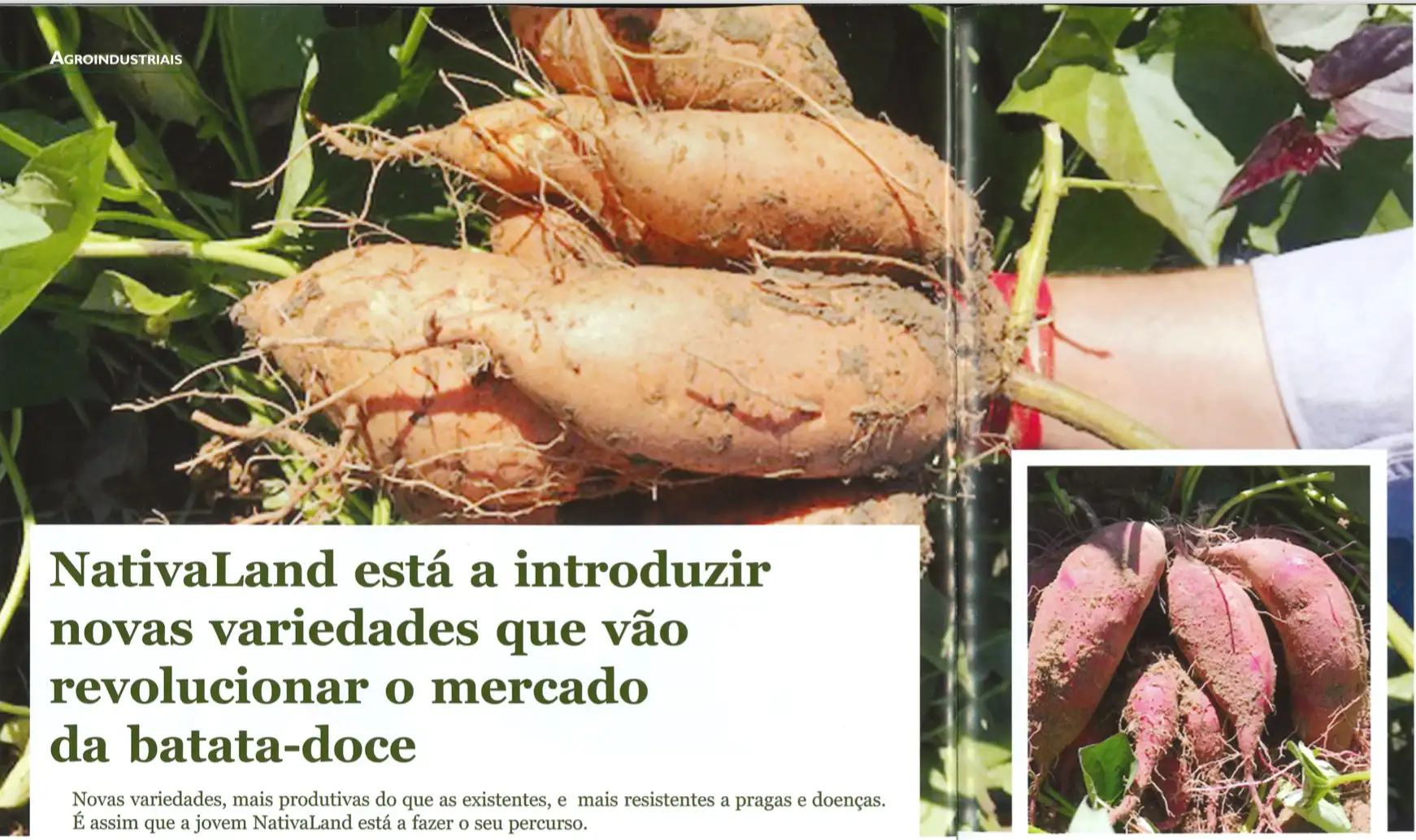
Portuguese company invests in new varieties
At the end of 2016, a new company was created with the aim of developing new sweet potato varieties also suitable for cultivation in Northern Europe.
The company, partly owned by an Irish plant breeder, aimed to respond to the growing demand for sweet potatoes on the European continent.
Publication date: 16/03/2018
Author: Rudolf Mulderij
Source: FreshPlaza
Copyright: www.freshplaza.com

Related News